
Why Recursive setTimeout is Smarter Than setInterval
October 5, 2024
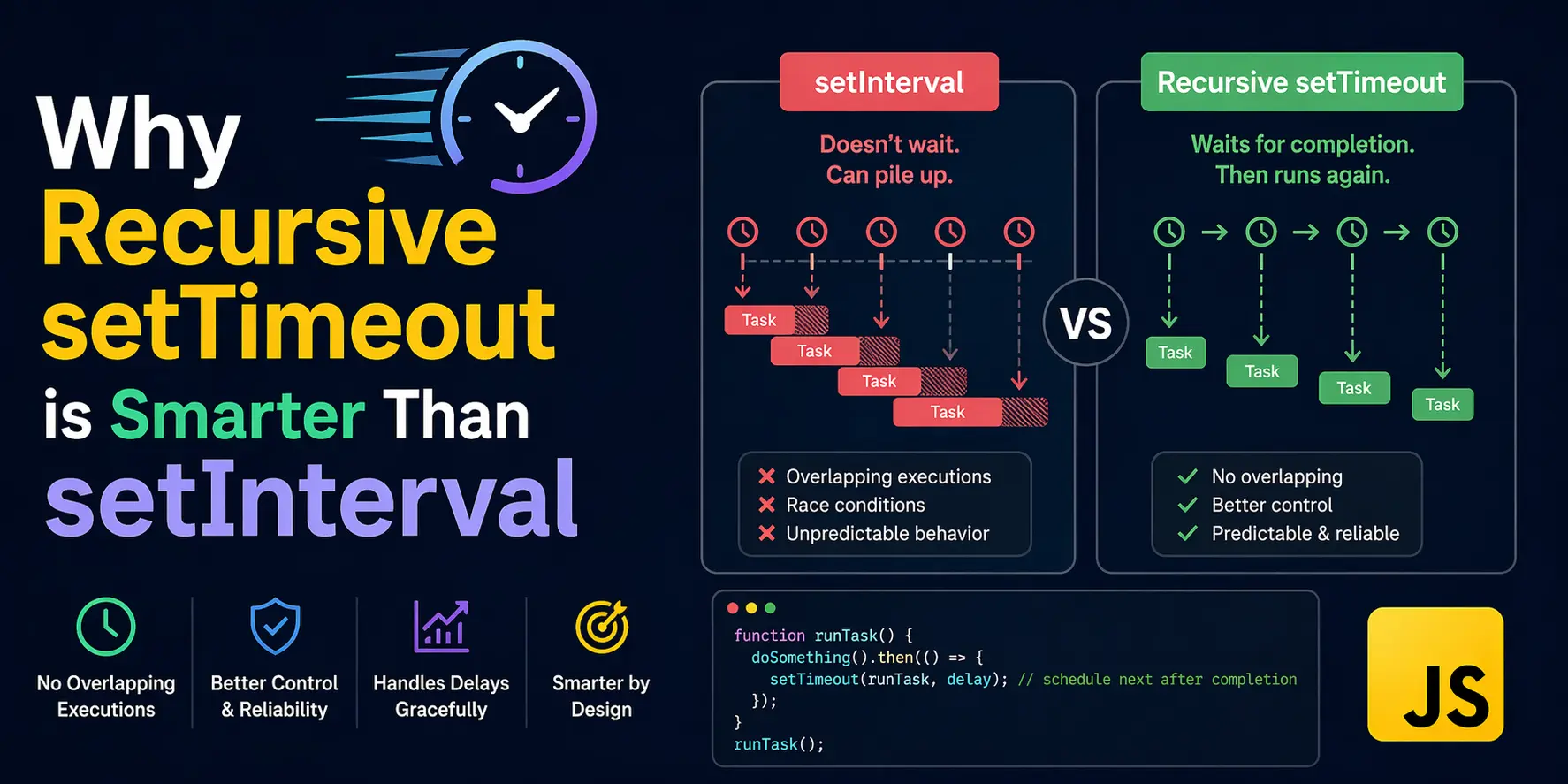
When working with timed functions in JavaScript, developers often turn to setInterval() as their main option. However, there is a more controlled and reliable method that doesn’t receive enough focus: recursive setTimeout(). In this post, we will look at why recursive setTimeout() is usually a better practice than setInterval(), particularly in real-world applications.
Understanding the Basics
setInterval()runs a piece of code repeatedly at fixed intervals, regardless of whether the previous execution has finished.Recursive
setTimeout()schedules the next execution only after the current one finishes.
Why Recursive setTimeout() Wins
Avoids Overlapping Executions
setInterval()does not wait fordoSomething()to complete. If your function takes longer than the interval, multiple instances can run concurrently.Problem Example:
This can lead to memory bloat, duplicate API calls, or race conditions.
Better Timing Control Recursive
setTimeout()lets you dynamically control the next delay.This can lead to memory bloat, duplicate API calls, or race conditions.
Handles Errors Gracefully Since each call is independent, if something goes wrong, you can stop or modify the next call without affecting other executions.
Syncs with Execution Time You can start the timer after the logic is complete, making the delay more predictable relative to each execution end time.
When is setInterval() Okay? There are cases where setInterval() is fine, such as:
- Simple animations
- Logging or heartbeat signals where execution time is negligible
Just be cautious of the overlap issue and test for timing edge cases.
Visual Illustration for understanding
setInterval
recursive setTimeout
Conclusion In modern JavaScript development, where async tasks, API calls, and performance matter, recursive setTimeout() provides a safer, more flexible way to schedule recurring tasks. While setInterval() still has its place, understanding the cons can help you write more efficient and bug-resistant code.
So the next time you need a timer loop, consider reaching for recursive setTimeout() instead.